
Are you planning a road trip? Figuring out your budget is your first pit stop.
A well thought-out budget is the key to unlocking an adventure filled with freedom and fun without breaking the bank.
Road tripping is one of the more affordable ways to travel, especially because so much is within your control.
While it sure would be nice to get up and go without worrying about how much everything will cost, that’s not realistic for 99% of us.
Whether you’re driving one of the most beautiful road trips in the United States or are planning to visit a specific destination, knowing how much you can spend is crucial.
Let’s get into the nitty gritty of how to budget a road trip, from setting your financial expectations to tips to stay on track.
If you want even more advice on planning your road trip, get Planning Your Perfect Road Trip! It’s filled with tips, tools, and more to help you have the adventure of your dreams.

There may be affiliate links in this post, which means we may get a small commission. It’s at no extra cost to you and helps keep TLT free. Everybody wins!
How to Budget a Road Trip
Set Your Budget

Start your road trip budget planning by determining an overall figure. Then you can adjust as needed.
To set your budget, decide how much total you can spend. Try to be firm on this number and plan to spend less.
That way, when you have additional expenses or there’s an opportunity to see, do, or eat something special, you can without worrying about it.
Understand the Costs
Once you know your overall figure, you can break down your major expenses:
- transportation (fuel, rental, tolls)
- accommodations
- food
- activities
- and a little extra for those spontaneous finds.
Don’t forget pre-trip expenses like vehicle maintenance or travel gear.
Transportation
Transportation is often one of the most significant expenses on a road trip. Expenses include not only gas costs, which can vary depending on gas prices and the efficiency of your vehicle, but also the wear and tear on your car or the cost of a rental.

If you’re driving your own car, you’ll need to factor in pre-road trip maintenance costs.
Calculate the distance you plan to travel using tools like GasBuddy’s trip calculator or AAA’s gas cost calculator to estimate fuel prices and find the cheapest gas.
Trip planning tools like RoadTrippers App and My Scenic Drive will also give you an idea of how much fuel will cost.
Gas prices fluctuate more often, and sometimes more dramatically, than weather in Chicago, so it’s a good idea to add more into your budget than the estimates.
If you’re driving through urban areas, be aware there may be toll roads. Google maps will display how much tolls are, and TollGuru provides detailed information.
Parking expenses can also add up. Fortunately, Spothero, Parkwhiz, and Way can help you find discounted spots. Using public transportation in major cities like Chicago or New York can help reduce these costs.
If your vehicle is older, it might be a good idea to rent a car. While it could cost more for the trip itself, you won’t have the danger of your car breaking down.
Things you’ll want to consider when trying to decide whether to rent a vehicle are mileage, safety, comfort, and wear and tear on your personal vehicle.
Renting a car might save you money on fuel, and you can often find deals on rental cars through memberships like those at warehouse clubs.

Keep in mind that the type of vehicle you choose can significantly impact your travel budget, so plan accordingly.
If you decide to rent, your next decision is what type of vehicle. Do you want to splurge and rent a convertible, go for more comfort with a luxury sedan, or allow for room for all of your stuff with an SUV?
Remember to include the credit card deposit when you’re including a rental car in your budget.
Accommodations
When you’re figuring out how to budget for a road trip, where you sleep can be a significant expense. The cost varies greatly depending on the type of lodging you choose and the location.
For those looking to keep expenses low, camping might be a suitable choice, with costs ranging from free campsites to higher fees for established campgrounds, especially if you need RV hookups.
Motels can offer a budget-friendly alternative, especially in small towns, while hotel rooms in big cities can cost a LOT of money.

To get an idea of how much accommodations will cost, browse aggregators like Priceline, Expedia, and Booking for your chosen destinations.
When budgeting for accommodations, consider the amenities that are important to you.
Things like free breakfast or a kitchenette can save you money on meals. Use hotel search engines to compare prices and find deals.

Remember, loyalty programs can offer savings and benefits, so it’s worth looking into chains where you might have points or memberships.
Lastly, flexibility can lead to savings. If your travel dates are not set in stone, you might find cheaper rates on weekdays or during the off-peak season.
You can also save by finding cheap accommodation with Priceline’s Express Deals. If you’re comfortable with uncertainty, they’ve also got Tonight Only Deals (available only in the app), or you can check out HotelTonight.
Food and Drink
Food can be a big part of your road trip, especially when you want to dive into local cuisine.
If what you eat is an important part of your trip, plan your meals in advance. Then you’ll know if you should pack ingredients and equipment to prepare a few of your own so you can splurge on a special dining experience.

Food costs can have a major impact on your expenses. Dining out, especially in tourist hotspots or major cities, can take a significant bite out of your budget.
A simple Google search or using OpenTable can give you a feel for how much restaurants in your destination will charge.
One way to save is by packing your road trip snacks and meals. Stocking a cooler with your own food like pre-made sandwiches, fruits, and healthy snacks can cut down on the additional cost of expensive pit stops.

Grocery stores and local markets are your friends on the road, offering fresh and often cheaper options than fast-food chains.
If you have access to a kitchenette or campfire, cooking your own meals can be both a cost-cutter and an adventure in itself.
Also, consider the timing of your meals. Lunch menus are often cheaper than dinner ones, and happy hours can offer delicious deals.
Want even more ways to save money? Check out dozens of tips in how to save money on a road trip.
It’s not just about the food—it’s also about hydration. Skip the bottled water; it’s costly for your wallet and the planet.
Bring refillable water bottles to fill up at rest stops and public fountains. Not only will you save money, but you’ll also stay hydrated for whatever the road throws your way.
Don’t forget to factor in the occasional splurge. A special dinner or a renowned local specialty can make for an unforgettable experience, so allow a little flexibility in your budget for those not-to-be-missed treats.
Activities and Attractions
Budgeting for activities and attractions is as crucial as a good pair of sunglasses on a sunny day. It’s the part of your road trip where you can experience the culture, history, and excitement of the places you’re visiting.

Costs for these experiences range from free walking tours and public events to pricey entrance fees at theme parks or special exhibits.
Because the expenses vary so widely, it might be easier to figure out what you want to do first and then see if it will fit into your budget.
When planning, make a list of must-see things to do and check if there are any free attractions or discounts available, such as group rates, family passes, or off-peak time entry.

Many cities offer city passes that bundle several attractions at a reduced price. Look out for combo tickets that provide entry to multiple venues or activities at a discount.
If you’re a fan of the great outdoors, consider investing in a National Parks America the Beautiful Pass, which offers annual admission to all parks in the system for a single fee.
For a family road trip, this can be particularly cost-effective. State Parks are an often overlooked, but eminently affordable, option.
Plan your outdoor fun with Midwest State Park Adventures!
Remember to also budget for discoveries on the road—those offbeat museums or local attractions that may not be on every tourist map, but can offer rich experiences for a modest fee.
Use technology to your advantage. Apps and websites can offer last-minute deals, and don’t forget to check out local tourism websites for any special offers.
Check out these favorite road trip apps.
You can also use sites like Groupon, Travelzoo, and GoldStar to find deals on attractions, shows, and concerts.
Just as with other aspects of road trip planning, a little research and flexibility can lead to significant savings and richer experiences.
TLTip: Visitors Centers, gas stations, rest stops, and hotel/motel lobbies will often have discount coupon booklets.

Estimate Other Potential Expenses
There are a few other things to consider that could impact your budget:
- Does your vehicle need any work before you leave?
- Do you need to enroll in a roadside assistance program?
- Do you need to board a pet or hire a pet sitter?
- Do you need to hire someone to water your plants?
- Do you need to buy equipment, like a new cooler or reusable plates and cutlery?
- Do you have proper attire, i.e. hiking boots/sandals, ponchos, light jacket, etc.?
- Do you plan on buying guidebooks?
- Will you drive any toll roads?
- Will you need to pay for parking?
- Are you going during busy season?
Download our free Road Trip Packing List to see if there’s anything you need to purchase before you go. If so, add that to your budget.
Tips for Staying on Budget
Budgeting for a road trip doesn’t mean skimping on fun; it’s about making smart choices that maximize both your dollars and your enjoyment.

Track Daily Expenses
Keep a daily tally of expenses to avoid budget surprises. Mobile apps can be great for this, or go old-school with a pen and notebook.
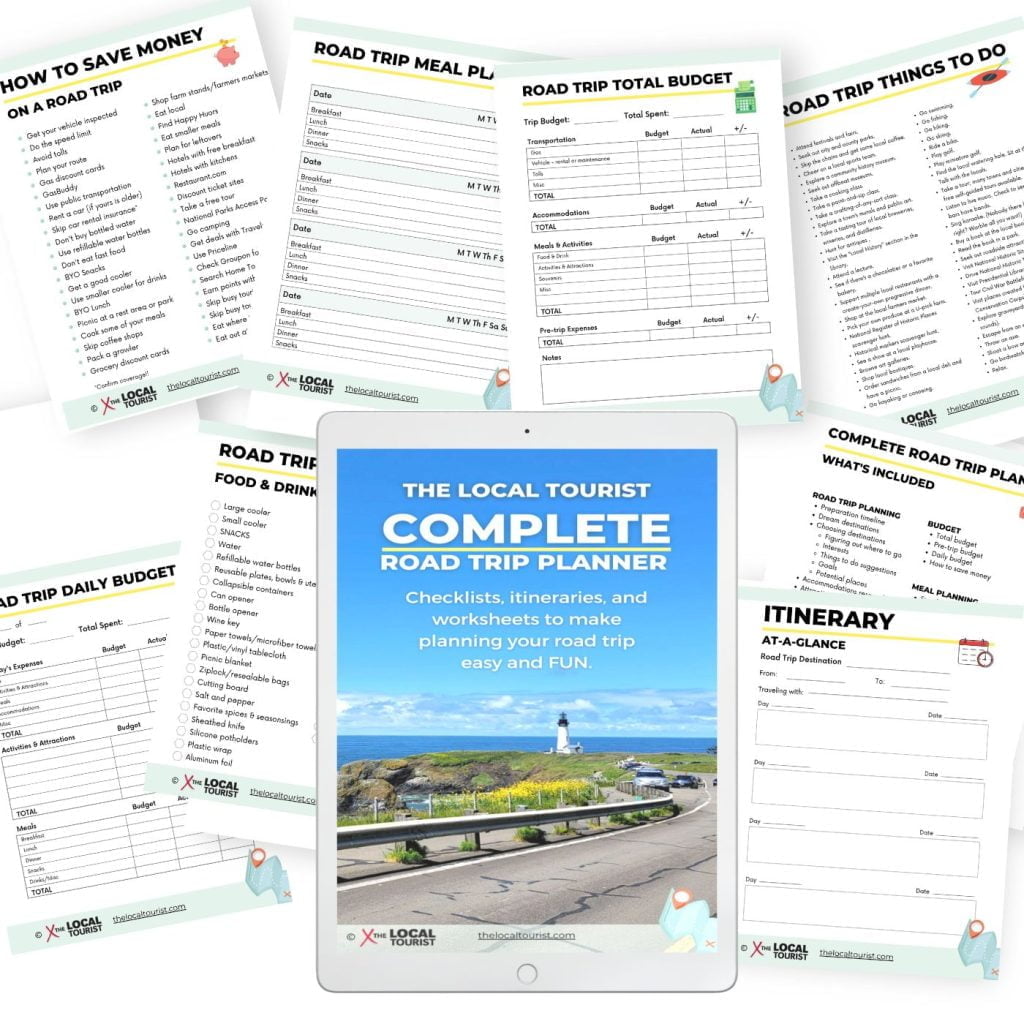
Our planning workbook includes budgeting worksheets. Regular check-ins with your budget can keep your spending on track.
Keep an Emergency Fund
Always have a little extra set aside for unexpected expenses. Whether it’s a flat tire or a must-try local eatery, it’s good to have a financial cushion.
Choose Value over Price
Sometimes, it’s worth spending a bit more for a once-in-a-lifetime experience or a safer option. Balance your budget with the quality and safety of your experiences.
Plan Your Meals
If food is a central aspect of your trip, plan your meals in advance. This can help you decide whether to bring ingredients for preparing your own meals or allocate funds for dining out.
Check out all these ideas for what to eat in our guide to road trip food.
Find Accommodation Deals
Use hotel aggregators like Priceline, Expedia, and Booking.com to find the best prices for accommodations.
Consider amenities that can save money, like complimentary breakfast or a kitchenette.
Seek Discounts
For activities and attractions, look for discounts online. Sites like Groupon and Travelzoo can provide deals on attractions, shows, and concerts.
Avoid Tourist Traps
Skip busy tourist areas and times where demand drives up prices.
Use Visitor Centers
They often have booklets with coupons for local attractions and dining.
Include a Buffer for Additional Expenses
Include potential costs like parking fees, especially in big cities, or toll roads in your budget.
Prepare for the Unexpected
Always have a contingency fund for unforeseen costs.
Be Flexible
Sometimes, you’ll find the best experiences off the well-traveled road and being flexible with your budget can allow you to enjoy these unexpected finds.
Being flexible is one of my best tips for planning an amazing road trip. If you can roll with changes, both good and bad, you’re going to have a much better experience.
With these budgeting strategies in hand, you’re all set to hit the road with confidence.
From tracking your daily expenses to finding the best deals on accommodations and activities, remember that smart planning is the key to a successful and enjoyable road trip.
Keep in mind to be flexible and prepared for the unexpected. Now, go explore the open roads and create unforgettable memories!
If you want even more advice on planning your road trip, get Planning Your Perfect Road Trip! It’s filled with tips, tools, and more to help you have the adventure of your dreams.
